"Beer in Colorado" is dedicated to that divine elixir born of the marriage of water, malt, hops, and yeast as interpreted
by those living in Colorado. Follow the author as he visits every brewery in the state, creates experimental homebrews,
attends beer festivals, tries interesting beers from around the world, and spreads the good word of beer. Prost!

Thursday, May 15, 2014

New Brew Fest showcases Colorado's greenhorn breweries

Brewery oversaturation: a played-out idea.  It’s not real (at least not for another few decades).  There are a thousand reasons why the notion of brewery oversaturation is a crock but I’ll leave you to your own devices on that one; search the internet and find the mythbusting facts for yourself (you can start here).

Since that little alarmist’s cry has been stifled, people have been conjuring up new ways to rain on craft beer’s parade.  Now, it’s not about how many new breweries are opening, it’s about how many new breweries are good.  It’s become a quality issue and, if you talk to Chicken Little, a few bad beers are poised to take down the entire industry.  Again I say, get on Google and search the topic yourself.  There’s no shortage of doomsayer articles.

I’m not writing a treatise on why the quality debate should, like the oversaturation debate, be dropped but I can’t help but make a few points.  First, commercial Darwinism is real.  The strong breweries will survive while the weak wither and die.  I hate to see any craft brewery close but that’s the cold, harsh reality of capitalism.  Paying customers will weed out subpar breweries before they do any real damage to craft beer’s overall public image. 
Whistle Stop Park

Secondly, the definition of “bad beer” is very, very subjective.  Official BJCP style guidelines exist but, in the end, customers drink whatever they want to drink regardless of whether or not it fits a certain parameter.  In Denver, there are breweries most “experts” deem as in need of improvement yet walk by any given weekend and the place is crammed with thirsty patrons.  You can rationalize it, say those patrons are idiots for supporting such a lacking establishment, but it doesn’t change the fact that the brewery is doing good business and people are enjoying their experience.  All due respect to the late Paul Walker but, if it were in my hands, I’d scrub the earth clean of every copy of every Fast and Furious movie because it’s an undeniably insipid film franchise.  But, it’s also a successful franchise and hasn’t done anything to diminish the erudite reputation of Cannes’ arthouse films.  This reality is paralleled in craft beer.  


Lastly, who’s to say good beer isn’t destroying the craft beer industry?  Pliny the Younger and Heady Topper are the Citizen Kane of craft beers, widely considered the top of the heap.  However, would Fast and Furious fans accrue any pleasure from viewing Orson Welles’ masterpiece?  No.  They’ll say it’s boring and then bring up Netflix to order Transformers: Dark of the Moon.  Why should anything different be expected when the man who’s only drank Bud Light his entire life sips an imperial IPA?  Undoubtedly, he’ll hate it and assume all craft beer is as awful and bitter, henceforth eschewing independent breweries.  As a matter of fact, this man should be given a terrible craft beer because it’d be more in line with his usual fare.  Once he’s introduced to the world of craft beer, he can explore further and grow and develop into a more sophisticated drinker.  Bad craft beer is, in essence, a gateway beer to bigger and better things.        

I’m dubious as to how detrimental new brewery quality really is to the industry as a whole.  I’m especially dubious after having attended the New Brew Fest in Niwot this past weekend—a beer fest for breweries five years or younger—where almost everything on tap tasted fabulous!


Sponsored by Colorado Beer Trail and Bootstrap Brewing, the inaugural New Brew Fest was held at Whistle Stop Park, a small, railroad-themed patch of grass on the edge of Niwot parallel to Diagonal Highway and the same freight train tracks running by Sanitas Brewing Co.  Having a locomotive roar past, ten feet from the beer tents, added an extra element of excitement to New Brew Fest; it mixed in a sense of danger and connected back to Colorado’s industrious past.  It’s such a simple thing, a careening train, but it added much to the event’s ambiance.  Click here to see just how close the train got to the festival.

Some stand-out moments from New Brew Fest:

·         Every first-time event has a few hiccups.  At New Brew Fest, the most obvious concern was the insufficient number of port-o-potties.  Indeed, a beer fest could rent every port-o-potty in the world and it’d still be insufficient because every beer festival attendant is a potential Niagara Falls.  Nonetheless, there was certainly room for more stalls and they could have cut the wait time by at least a few minutes. 

Okay, there was one other hiccup. This seems legit enough until...
...I think there's something missing here
·         When a beer fest features live music, to me it’s either white noise or intrusively loud.  However, I have to give it up to the first band at New Brew Fest who performed a bluegrass-yet-rock-n-roll rendition of Lady Gaga’s “Bad Romance.”  My inner “Weird Al” Yankovic fan appreciated the humor of it all.  That wasn't their only great cover, either; Nicole couldn't help but find herself singing along with and swaying to their music.
·         Nicole and I made a concerted effort to visit the breweries we’ve yet to see in person and, because the breweries at New Brew Fest are so new (or because Nicole and I just haven’t gotten around to them), we had a lot to visit.  They included 300 Suns Brewing, 4 Noses Brewing Co., Powder Keg Brewing Co., 12 Degree Brewing Co., Very Nice Brewing Co., and Wonderland Brewing Co.     
·         Some memorable beers from New Brew Fest: the sour and spritz-y Mimosa, a sour ale aged in Champagne barrels with Satsuma oranges, from Powder Keg (their hibiscus saison was also stellar), the fruit-tastic and summery Passion Fruit Wheat from Industrial Revolution Brewing Co., the green-tea infused Lu Yu Golden Ale from The Post Brewing Co., and the New Zealand-hopped Legal Nelson from 12 Degree Brewing Co. 

New Brew Fest wants you to play it safe and ride your bike.
Hold your head high, new breweries; although the current trend is to drag your good name through the dirt, insinuate your poor-quality beer will eventually destroy the craft beer niche that more senior breweries worked so hard to hew out, the truth is it’s all just generational bickering.  The Baby Boomers disparaged the Gen Xers and the Gen Xers thumb their noses at the Millenials just as older breweries put down new breweries.  That’s fine; today’s new breweries will surely continue the tradition of crapping on the new guys when next decade’s breweries roll out.  In the meantime, though, know that new breweries pose no serious threat to the industry as a whole—New Brew Fest made that abundantly clear.

Prost!

Chris    

P.S. The gourmet waffle food truck was to die for.  We ordered the caramel apple waffle and it was a glorious pile of whipped cream, sugar, caramel, and everything else that is terrible for the body.


Thursday, May 1, 2014

Lagers in Englewood: What CAMRA's Missing Out On

The United States is the premier beer nation.  That’s not ego talking, that’s the truth.  We’ve influenced yeast-forward Belgian brewers to dabble in American hops, we’ve convinced German brewers to revive their trade by giving Americanized craft beers a shot, and we’ve inspired breweries like Scotland’s Brew Dog to forgo tradition and brew big, bold, genre-defying beers.  We’re leading the pack in innovation.     

Admittedly, that’s not always been the case.  In fact, as recently as 15-20 years ago, America was the laughingstock of the brewing world and had been for decades prior.  “How’re American beer and sex in a canoe similar?  They’re both F’ing close to water!” went the joke.  Nowadays—thanks to patriotic beer drinkers eschewing the wares of domestic mega-brands—craft beer is steadily growing, macrobeers are steadily declining, and the U.S. beer industry is the envy of the world.

To what can one attribute America’s rapid rise to the top?  It’d be insincere to ignore the old school brewers of the Old World; without a healthy European brewing tradition, the American craft beer scene would be nonexistent.  Where would New Belgium be without the lessons of old Belgium?  Where would the most popular craft beer style, the American IPA, be if England didn’t invent its predecessor?  Never forget your roots, America.

St. Patrick's Brewing Company
What differentiates American brewers from those across the Atlantic, however, is our spirit of adventure, our straying from the norm.  You can’t knock a solid, traditionally-made beer; they’ve stood the test of time and they’re deserving of our admiration.  For posterity’s sake, I hope the classic beer styles never wither and die.  Nonetheless, brewers need to look towards the future, too.  There’s room at the bar for both new and old.  If attention is focused on the latter, the culture of beer becomes stale, outdated.

The entity shouldering the most guilt in preventing beer’s forward motion is the U.K.-based advocacy group Campaign for Real Ale (CAMRA).  I hesitate to compare CAMRA to the America-based Brewers Association (BA) because they’re different in sundry respects but they’re similar in that they both promote (their definition of) great beer. 

Don’t misunderstand me; I believe CAMRA to be a well-intentioned organization.  They’ve done much to pave the way for the current craft beer craze but it’s time to re-write the books and bring CAMRA into the 21st Century.  What’s so obsolete about CAMRA?  Brew Dog wrote an exceptional blog post highlighting the archaic guidelines that define the group (Click here to read the article) but, for this post, I’d like to concentrate on the most obvious limitation: the name is CAMRA, not CAMRAL—they totally discount lagers!

Inside St. Patrick's
The U.K. doesn’t really “do” lagers; I can’t, off the top of my head, call to mind a classic lager style born in that region—none that have survived into the present day, anyway.  CAMRA is, at its core, a nationalistic organization invested in the beers of its own land.  That’s all well and good but—guess what?—lagers still exist.  And they comprise nearly half of all the world’s beer styles.  And they’re just as good as ales.  And there are U.K. craft brewers today making lagers.  And it’s B.S. lagers don’t fall under CAMRA’s umbrella of endorsement because all well-crafted beers should be celebrated. 

Here in America, the BA supports ales and lagers, classic styles and new innovations.  That’s why we’re at the top of the heap.  We never limit ourselves.  After visiting St. Patrick’s Brewing Company, an all-lager brewery in Englewood, I count my sudsy blessings I live in a country where all beer is welcome.

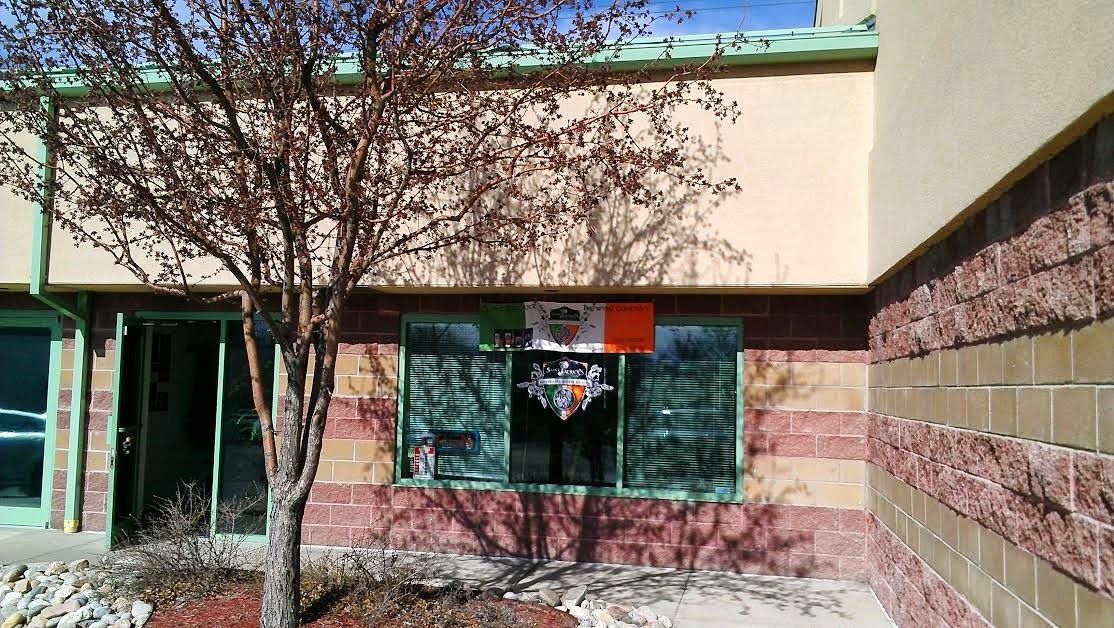
First, allow me to air one, single gripe about St. Patrick’s: that is one awful name for a craft brewery.  It comes packed with negative connotations; it sounds like a tourist pub in Boston or Dublin, not a pioneering nanobrewery in a south Denver suburb.  A place called St. Patrick’s serves green beer on March 17th, not stellar lagers year-round.  I’ll go to a bar named St. Patrick’s to have intoxicated frat bros vomit on my shoe, not to meet people with an affinity for the art and science of craft beer.

Plus, despite the uber-Irish appellation and logo, the specialty at St. Patrick’s isn’t beer from the Emerald Isle.  They brew Pilsners in the Czech, German, American, and Japanese style.  They brew bocks and schwarzbiers.  They brew Austrian and California lagers and lagered versions of saisons, dubbels, barleywines, and wits.  Hell, it seems they brew beer from every country except Ireland (there’re one or two exceptions).  This brewery suffers from an identity crisis. 

Midnight Mocha Lager
What’s in a name, though?  Not much because, even though I’m irked by the poor branding, the beer speaks for itself.  It speaks volumes, in fact.  This is world-class beer, folks; seriously, it’s a no-brainer to put St. Patrick’s on the top 10 list of best Colorado breweries and it’s not inconceivable it might break top five, either. 

Patrons driving up to St. Patrick’s taproom—on the backside of an office park so bland it’s almost flamboyant—might think they’ve arrived at a dentist’s office.  The interior does nothing to dissuade the oral hygiene vibe; the tiny taproom is decorated in the style of a waiting room and the “bar” is nothing more than a square hole in the wall where, in another incarnation of the space, a receptionist would check in patients.  The focus here is solely on the beer, not on feng shui. 

Everything St. Patrick’s makes is either a perfect replication of a classic lager or an insane, creative twist the likes of which most beer geeks have never drank.  St. Patrick’s does it all and they do it with expertise.  I ordered Midnight Mocha Lager (5.7% ABV) and HellEdel Helles (5.2% ABV).      

As the name suggests, Midnight Mocha is midnight-black in color and features a mocha-hued head.  Chocolate aromas permeate but they’re not overly powerful.  Relatively light in body, this beer is, in a nutshell, like cold, mildly-flavored cocoa.

HelleEdel and a taster of Luminosity Oak Reserve
HellEdel Helles, slightly hazy with a sunset orange color and white, fluffy head, sends off wafts of orange blossom honey.  Until I started writing this review and double-checking stats on the St. Patrick’s website, I had no idea there was actually orange blossom honey literally in the beer; an expert beer assessor I am not but I’m pretty proud when I’m able to rummage around with my nose, sniff out specific ingredients.  HellEdel is somewhat thick and creamy and tastes of the aforementioned honey along with light, malty sweetness. 

The beauty of St. Patrick’s—they provide free samplers.  Believe me, you’ll want to take advantage of the offer.  The beer is much too enticing to call it quits after only two.  Get a sip of them all because there’s not a stinker in the bunch.  The other beers I sampled include Red Lager (6.1% ABV), Luminosity Lager (5.8% ABV), Luminosity Oak Reserve (5.8% ABV), Saison Apple Lager (7% ABV), and Chocolate Peppermint Lager (7.3% ABV).  When at St. Patrick’s, let your palate explore; it will discover wondrous things!  

Right now, St. Patrick’s is relatively obscure but they deserve to be a part of the Colorado beer conversation and, indeed, the national conversation.  Please, check them out and give them your money.  I want them to expand and make their beer more accessible; Englewood is too far a drive to get my lager fix.

If you buy glassware at St. Patrick's, they give you this little snake thingy, too
The dreamer in me hopes St. Patrick’s future success will somehow, in some small way, influence CAMRA’s stance on lager beers.  St. Patrick’s is one in a legion of great lager-makers but perhaps, as a whole, the lagers of the world can convince the passé organization to see the error of its way.  Do I honestly believe CAMRA will ever make that major paradigm shift?  No, not really.  Their raison d'etre from the very beginning was to revive the old styles of Great Britain, shun modern advancements (whether said advancements are detriments or improvements), and basically ignore the practices of foreign brewers.  That’s fine; CAMRA will be CAMRA.  Thankfully, their influence is localized; their opinions don’t affect American brewers.

So, to those beers spurned by CAMRA, I welcome them to our shores saying:

Give me your lager, your beer, 
Your huddled masses yearning to drink free.
The wretched refuse, the object of CAMRA’s leer.
Send these, the homeless, tempest-tossed to me.
I lift my glass beside the brewery door!
      
Prost!

Chris


P.S.  After St. Patrick’s, I went to CAUTION: West where I received my “Extraordinary” badge on Untappd; that’s 1,000 unique beers!  

Look at this stud (and ignore the quality of the photograph)!


Tuesday, April 22, 2014

Pick a Theme, Stick to the Theme: Kokopelli and Lowdown

Born c. 750-850 AD, the fertility god of the Hopi, Zuni, and other southwestern tribes shook off the desert dust, packed up his flute, traveled to the Colorado front range, and set up shop in a Westminster strip mall.  Welcome to Kokopelli Beer Company.


A far cry from the ancient cliff dwellings whence he came, the shopping center setting of Kokopelli’s namesake brewery fills an important niche in a fairly large Denver suburb; with Westminster Brewing Co.—only a few months old—as the only other brewery in town, Westminster is the opposite of a beer oasis.  It’s a patch of barren sand surrounded by oases, a sandbox in Eden.  As the municipalities around Westminster undergo their own brewery renaissances, Westminster itself seems immune to progress.  The people running Kokopelli were wise to open in this ‘burb; there was an obvious demand needing to be supplied.

Inside Kokopelli
When driving up to Kokopelli, be watchful for brewery signs.  The outside appearance is anything but descript, nothing save for the words “Beer Company” indicate there’s a brewery inside this shopping center.  No open garage door revealing happy revelers.  No grain silo sitting outside.  No hop vines crawling up the façade.  Indeed, everyday, non-drinking patrons at the shopping center probably drive by assuming it’s another massage parlor or Chinese restaurant.  Only beer geeks know what truly lies inside.

Kokopelli’s interior design is less cookie-cutter than the exterior but it’s still rather Plain Jane—a few pieces of art on the drywall, a chalkboard sign behind the bar.  The space isn’t bare but it isn’t flashy, either.

Nicole and I ordered a flight of three: Hopenstein Cascadian Dark (6.9% ABV), Pale Face Ale (5.5% ABV), and O.T.O.G.O.B. Irish Dry Stout (4.3% ABV).


Left to right: Hopenstein, Pale Face, & O.T.O.G.O.B.
A deep, dark, mahogany red, Hopenstein has a mocha-colored head and a milk chocolate nose.  Pine and citrus hops make an appearance but they’re quite mild.  There’s a touch of lingering bitterness but it seems less like the bitterness from a hop and more like that of a cocoa nib.

Pale Face is a cloudy, darkish yellow with lacey, white foam.  It features an aroma of clementine and that orange citrus taste follows through in the flavor followed by a bread-y aftertaste.  It’s more fruity than bitter but I wouldn’t call it a “fruit beer” per se.

Word on the street is only a select few people know what O.T.O.G.O.B. means.  I don’t know that acronym but I know this beer looks like a darker version of Hopenstein and it smells and tastes like dark chocolate with a light roast.  The flavor, too, is akin to Hopenstein except higher on roasted flavors, lower on bitterness.  As the style “Irish dry stout” suggests, O.T.O.G.O.B. finishes dry. 

Can't argue with that
Overall impression of Kokopelli: it’s pretty good.  Like I said earlier, Westminster is in dire need of local beer-slingers and Kokopelli fits the bill.  I don’t, however, like the theme.

Westminster is not the Southwest.  Granted, parts of Colorado are considered the Southwest but not Westminster.  Westminster is on the plains.  To put a brewery on the prairie and call it “Kokopelli” is a cultural misplacement.  One might say breweries like Prost Brewing and Hogshead Brewery are also juxtapositions to their surroundings (Colorado isn’t in Germany or the U.K., of course) but the difference there is that those two breweries continue their themes beyond the name; Hogshead brews traditional English ales and Prost brews traditional German beers.  They become islands of Europe in Denver, a quick, passport-less vacation abroad.


The ancient, native god of back rubs
Kokopelli, however, is like an egg in a carton: the carton is Westminster, the shell is American Southwest, but the inside of the egg goes right back to Westminster.  It’s a very thin theme at Kokopelli.  It’s too late to change the name but it’s not too late to commit to the name.  Give the interior a Southwest make-over.  Let’s see some red rock accents and Ancestral Puebloan artifacts. 

Even changing the names of the beer could help.  The name of the Cascadian dark ale is a pun on the title of a Gothic novel and nobody but two or three people knows what the hell the name of the Irish dry stout is supposed to mean--they just don’t fit the theme.  Give the beers appellations that evoke the grandeur of Chaco Canyon, Mesa Verde, or Canyon de Chelly.  If the brewers at Kokopelli are really clever, they’ll figure out how to make their beers taste like the theme, too.  Brew with cactus or other desert flora, perhaps.  Maybe a steinbier made with actual rocks gathered from the Southwest?  Let the imagination run wild!

After Kokopelli, Nicole and I grabbed lunch at LowDown Brewery + Kitchen which is as urban as Kokopelli is suburban: sleek concrete floors, brick, warehouse-style walls, exposed, vaulted, wood ceilings, and giant HVAC ducts coiling overhead.  If it weren’t a brewery, this space would be a hipster’s art gallery.  It’s a piece of Santa Fe Art District on Lincoln.  I also dig the words written on the floor—different ways to make a toast from around the world.

I ordered a Cuban sandwich and Sinister (8.5% ABV), a French saison brewed with wildflower honey and Szechuan peppers.  This cloudy orange concoction smells mostly of honey with some Belgian yeast spice swirling about.  The flavor is akin to ginger with perhaps an aftertaste of the Szechuan pepper.  I would have preferred more pepper as it was that odd-ball ingredient that first lured me into ordering Sinister.  Still, it was a pretty good beer with a tasty sandwich in a neat space.  The food will definitely bring me back and, when that happens, I look forward to trying more of their beer.

Sinister
Inside LowDown

As it says on the floor at LowDown:


Chris

Tanks at LowDown
Inside LowDown
The floors of LowDown

Monday, April 14, 2014

The 2014 Craft Brewers Conference: A Re-Cap

It’s okay to not be a beer geek but, like any group one is not a part of, it’s irresponsible to make assumptions about said group.  For example, I once tried to explain the symbiotic relationship between bicycles and craft beer, how there are many brewery bike tours and how brewers sometimes prefer bikes as a healthier (and safer) alternative to motor vehicles.  The person I told this to immediately presumed that brewers rode bikes because they had DUIs and lost their licenses. 

A sign of the times
Likewise, some of Colorado’s more unenlightened cannabis advocates might decry the horrors of alcohol, that more breweries means more drunk driving, more spousal abuse, and more rapists—basically the beer-version of Reefer Madness  (DISCLAIMER: not all cannabis advocates have such an acidic personality but there are enough that do for me to notice).  These foolish folks don’t realize craft breweries attract a different sort of crowd than a college frat party; beer geeks are more passionate about the beer than about its drunken effects and more breweries doesn’t necessarily mean more drinkers, it means the drinkers that already exist have more options.  Perhaps it also means these drinkers have less of a distance to bike to get to the libation they so love. 

A less detrimental stereotype of brewers is that they’re party-animals--no work, all play.  In fact, brewers are business-people like any other and, as with any business, brewers must always be educating themselves, improving their craft, and staying on top of their game.  Indeed, fun is usually had at a brewery but it’s interjected with serious business.  That good times/nose-to-the-grindstone hybrid is what Craft Brewers Conference (CBC), held in Denver’s Colorado Convention Center this past week, is all about.

Organized by the Brewers Association (BA), the CBC is a vast gathering of brewers from all corners of the nation (and quite a few from abroad, too).  It’s a place to network, to discover the latest innovations, to hone one’s skills, and, yes, to have a beer or two.  I was lucky enough to attend this year’s CBC, attend a few seminars, and walk the trade show floor.  Unfortunately, it’s such a massive event that I saw but a fraction of what CBC had to offer.  However, everybody only gets to see a fraction of CBC; it’s the nature of the beast what with several seminars all booked for the same time.  Regardless, I got a peek at the goings-on and this is my take on it.

Colorado in a can
Immediately after picking up my badge, I received a goodie bag full of press releases, schedules, and, most importantly, a royal pint can of Centennial State Pale Ale, a collaborative beer sponsored by the Colorado Brewers Guild brewed specifically for CBC attendees.  I actually had the opportunity to witness this beer being made and it was a treat to follow the beer from birth to death (i.e. me drinking it).  It’s a fantastic beer, too!  It’s a perfect example of how a hoppy beer doesn’t need to be a bitter beer.  Centennial State is full of tropical, pineapple aromas that fade to strawberry as it warms.  Those scents carry over into the flavor with a hint of peach accompanying.  It’s not a fruit beer, though; it still retains its pale ale status.  It’s just a very complex and unique interpretation of pale ale. 

The first class I took at CBC was the MicroMatic Dispense Course.  This 9am-4pm class covered everything (yes, everything) anybody would ever need to know about draft systems.  From every piece of equipment and how to dismantle it, to installation, to proper gas blends, to trouble-shooting tips, no stone was left unturned.  It was a brain-drain of information but a few points stick out in my mind.

·         100% CO2 systems are for chumps and amateurs; the pros blend it with nitro and not just for “nitro beers” like Left Hand’s Milk Stout, even regular beers have a touch of nitro in them.  CO2 alone has restrictions as to how far you can run the lines.  Also, there’s a really complicated algorithm that helps determine the exact blend of gas for any particular beer but, when my eyes saw all those numbers and calculations, my brain shut down all functions until we had moved on to something a little more comprehensible.
Quite an array at the MicroMatic course
·         Why on God’s green earth somebody would do this I do not know but, in case you ate a lot of paint chips as a kid, don’t, for the love of all things holy, store your CO2 tanks inside a walk-in cooler.  Sure, they’ll still technically work but the cold temperatures screw up the gauges.  Besides that, CO2 is poisonous.  If a tank were to spring a leak out in the open, the fumes would dissipate into nothingness.  No harm, no foul.  If, however, they leak in an enclosed space like a walk-in cooler then, buddy, you got yourself an unintentional gas chamber. 
·         Brewers take note: your glycol chiller, the contraption that keeps beer at a constant temperature when sitting in the lines, should be at eye-level and in a place you look all the time.  Why?  Because those suckers need to be clean for them to work.  If they’re stuck up in the ceiling (as many of them are), they’ll turn into giant dust bunnies.  Worse yet, you won’t know they’re giant dust bunnies because, as the saying goes, “out of sight, out of mind.” 

The MicroMatic course was held on the first day of CBC but it was the next day that the event really kicked-off with the keynote and general session.  This was a time for BA representatives and other beer folk to speak to the crowd, update the brewers on the state of craft beer, and basically get everybody psyched-up about being in such a cool industry.  A few key moments from the speeches:

When The Hick speaks, people listen
·         “Get your ass in gear,” says Gov. John Hickenlooper.  The beer geek’s favorite politician made a point that, aside from the historical Sam Adams, he’s the only brewer to have advanced to the gubernatorial level.  He challenged the crowd to get more involved in the world around them, run for election, and make a change in their community.  He argued brewery owners are uniquely qualified for the position: they have customer service skills, they’re collaborative, they care about quality and virtue, and they’re pragmatic.  I’d certainly like to see more brewers get involved in government because The Hick is right—brewers are of the people and they fight for the average, hard-working American.  Who will follow in Hickenlooper’s footsteps?  Mayor Chad Yakobson?  Senator Kim Jordan?  President Dale Katechis?  We’ll see what the future holds.
·         There are more breweries opening than closing but, with exponential growth in the industry, it’s only a matter of time before the number of closing breweries begins to rise.  Paul Gatza of the BA referred to the great brewery die-off of the 1990’s, claiming those with a passion for beer survived whereas those focused solely on making a buck closed shop.  Keep your humanity, brewers; don’t get spellbound by the Almighty Dollar and your business will last longer.
·         Gatza mentioned quality as a main concern for today’s craft brewer.  With so many new breweries opening, how many are actually good?  The industry as a whole needs to have high standards lest drinkers revert to corporate brewers; why spend the extra dough on craft when the quality isn’t there?  After visiting several new breweries at the most recent Great American Beer Festival (GABF), Gatza said 7 out of 10 of the beers he tried could, at the very least, use some tweaks.  Please, always be educating yourself brewers, and practice your craft until the day you retire.  Craft beer has come too far to start losing customers due to sub-par beer.  This plea goes out not only to the small and new brewers but to the big, well-established ones, too; anybody can become complacent.
·         The keynote speaker was Michael Pollan, a writer and foodie who, while not necessarily a “beer guy,” is an expert on all things consumable.  He doled out fascinating facts about beer and alcohol, discussed the science and history of the topic.  Some thought-provoking tidbits of information included the fact that squirrels bury acorns not in an effort to hide them but to ferment them.  This is probably done more to soften up the nut than it is to catch a buzz but it does make squirrels the only known animals besides humans that process their food before they eat it.  Pollan also said elephants have such a craving for alcohol that, in India, they’re known to tear down the walls of distilleries to get to the good stuff.  Brewers beware: if a circus train derails near your brewery, vacate the premises; Dumbo’s coming for you!

The BrewExpo America Trade Show was held in the same space as GABF and was just as overwhelming: rows upon rows of vendors all hawking their respective wares.  These included hop growers, malt farmers, yeast cultivators, canners and bottlers, equipment manufacturers, apparel companies, distributors, and representatives from every other possible niche in the brewing industry.  There were also beer pouring stations throughout the room; one needs a beer after being taken aback by the awesome sight that is the CBC trade show.

What is that?  I want that!
Walking the trade floor, I made a point to stop and sniff at all the hop farmer tables.  I love hops in my beer, of course, but just to take a handful, rub them together, and get a big whiff is a most pleasant olfactory experience.  For a visual spectacle, though, you can’t beat the Rube Goldberg-esque machines on display at the manufacturers’ booths; canning systems, bottling systems, automatic cleaning jets, robotic, keg-lifting arms were all operating and dazzling the crowd.  Watching those machine work, with all the whirling frenzy of moving parts is quite hypnotic.


The next seminar I attended was the Craft Malt Sensory Workshop wherein maltsters (the title is derived from “malt stirrer”) from across the country explained the status of today’s malt farms and how geography has a fairly large impact on the aroma and flavor of any given malt.  To showcase the diversity of malt, everybody was given six, simple beers that were exactly alike except the malts came from the far-flung farms of the six presenters.  Geography certainly does matter; some of the variations among the beers were slight, some obvious.  I’ll say one thing, though: gluten-free brewing grains will never stack-up to traditional malts.  I feel bad for people with celiac disease.  They drink a gluten-free beer and think they’re drinking beer but it’s not remotely the same.  To me, gluten-free beers have a dirty vegetable-like flavor and that icky taste really showed through at the sensory workshop where hops and yeast weren’t clamoring for attention.  My suggestion for casual gluten-free drinking: go with gluten-free hard cider—much better than gluten-free beer.    

Six malts from six maltsters
Lastly, I attended the OSHA seminar on brewery safety and how brewers can best mitigate the financial blow and social stigma of undergoing an OSHA review.  Some startling data was presented at this seminar:

·         The injury rate in the beverage industry is 6.5% whereas the national average is 3.4%.
·         Breweries are seven times more likely to be inspected than the national average.
·         The average OSHA brewery walk-through results in three citations and a total financial blow of $11,500 (although 22% result in no violations whatsoever).
·         40% of all OSHA inspections come as a result of employee complaints.  Brewers, listen to your employees; if they take issue with something, fix it before OSHA gets at you.
·         Be smart should OSHA come a’knockin’.  Keep the inspector focused on the task at hand.  If the complaint was about slippery floors in the brew space, don’t walk them through the distribution warehouse where they might find even more problems.  Brewers are also within their right to not re-enact day-to-day operations, one must tell, but not show.  If, say, a brewery tells a brewer that they carry sacks of grain from one room to another, that’s a vague but sufficient description.  If the brewer acts out the scene, the inspector might notice a stupid little detail (e.g. a small amount of grain falls out of the sack making for a hazardous walking area) that may result in a few hundred dollars in fines.

Although I did not attend, the biannual World Beer Cup (WBC) recipients were announced on the final day of CBC.  True to form, Colorado came out on top with 24 total medals (second most) and 10 gold medals (the most).  The closest competitor, California, walloped the field in the overall medal count with 35 but, with only 9 gold medals, Colorado eked them out in top honors.  Silver and bronze are nice but, as Ricky Bobby said, “If you ain’t first, you’re last.” 

These results mirror those of the 2013 GABF which begs the question: why do we still bicker about which is the best craft beer state?  There’s no argument.  Colorado is the best.  California and some other states have a larger quantity of breweries but that’s not the same as quality.  That’s how California gets so many overall medals—lots of breweries equals lots of competition submissions equals a better chance at snagging a prize.  But not necessarily a first-place prize, which are the ones that really matter.  If Colorado had achieved the most gold medals and no silvers or bronzes, I’d still say Colorado is the best. 

There are different ways to assess the quality of something so subjective as beer but the closest we’ll ever get to a scientific evaluation is with the WBC and GABF—they’re conducted via blind taste tests with trained and certified beer judges.  There’s no bias involved and judges’ palates are acute to every minute detail.

Some may argue WBC and GABF are flawed because not every brewer sends a beer in to be assessed.  There is a hefty fee associated with each submission and that can be a deterrent.  That’s no excuse for one state winning fewer medals than another, though; if a brewer has something really special on their hands, they’ll pony up the dough.  The submission fee is mere pennies when compared to the reputation gained through a WBC or GABF win.  Many brewers wisely hold on to their money because, while their beer may be quite tasty, they know it’s not going to break the top three.  Lack of entrants does not mar the results because the best of the best always comes ready to play.

So, Colorado is the best.  End of debate.  Other states make great beer, too, but there can only be one champion.  The guy who comes in second to Usain Bolts is one quick S.O.B. but he doesn’t get to stand on the highest podium.  Maybe the standings will change in coming years, maybe other states will start winning more gold medals than Colorado, and, when that happens, Colorado will have to abdicate the throne.  Until then, however, we’re top o’ the heap. 

Again I say, my time at CBC was a mere slice of the whole.  Other attendees may well have had a completely different experience than mine but I guess that’s the beauty of CBC; it forces the brewing community to come together, share their experiences, and teach other brewers.  It opens a dialogue and, eventually, all the knowledge and information from CBC gets around to everybody.  That is how I like to view the craft beer world: open, honest, helpful.  Thank you, CBC, for promoting that communal culture.

Prost!


Chris         

P.S. Please enjoy these additional photos from the trade show.


Tuesday, April 8, 2014

Conquering Boulder (For Now)

Short lived victories are victories nonetheless.  When A-Basin blows enough snow for Fourth of July skiing, that’s a victory even if the slopes are slush by the fifth.  When the Colorado Rockies hit a homer in the first inning, they’ll celebrate the run even when a routing in the ninth is imminent.  And, when beer geeks like me and Nicole “conquer” a city—visit every brewery within city limits—we’ll cheers to that even as new breweries are under construction, ready themselves for opening and nullify our accomplishment.  That’s the situation in which Nicole and I find ourselves; after recently stopping by The Kettle & Stone Brewing Co., Sanitas Brewing Co., and J. Wells Brewery, we’ve drank at every brewery in Boulder.  For now.  In fact, this is the second time we’ve been able to claim such a feat; Boulder just won’t stay down. 

Kettle & Stone
First up, Kettle & Stone, located well north of central Boulder in the grasslands off Diagonal Highway and tucked deep into a business park complex.  It’s far from the hustle and bustle of college kids and the panhandling hippies of Pearl Street; it’s a quiet nook surrounded by suburban homes, prairie dogs, and the occasional passing freight train.  It is place that’s found only if sought; one doesn’t simply stumble upon Kettle & Stone.

Aside from a catalog-bought beer flag staked into the front lawn, there’s not much signage indicating there’s a brewery waiting within.  Kettle & Stone writes their name on the front door and on the sign at the parking lot entrance but neither really pop out to the passing driver; at a glance, the sign for Kettle & Stone might as well be for a tech company or a welding service.

The interior is a bit comfier.  A corner lounge with leather couch, butcher block-thick slabs of wood acting as high-top tables (as well as the bar top), and metal/wood/chalkboard accents behind the bar makes Kettle & Stone a welcoming little oasis of creativity in a gray, faceless setting. 


Nicole ordered the house ginger ale and I had tasters of Momentum IPA (5.7% ABV), American Bold Ale (7.2% ABV), and American Bold’s bigger brother, Bolder (11.7% ABV).

Left to right: Momentum, American Bold Ale, Bolder 
Technically not sessionable (but, in practice, sessionable), Momentum is a brassy orange color.  It’s not entirely opaque but it’s not entirely see-through, either.  The aroma is quite faint and one could almost say this IPA is bready, more yeast-forward than hop-forward.  The flavor, likewise, is light on hops and very mild on bitterness.  There’s a little lingering bitter in the aftertaste but nothing significant.  Overall, the flavor is akin to orange citrus with the tamest touch of hops.  It’s an intro-level IPA, a great beer to introduce to the hop adverse.     

American Bold Ale is essentially clear and boasts a deep ruby/amber color.  Scents of caramel and toffee abound.  Upon first sip, this beer reveals itself as a thick and creamy elixir resplendent with caramel flavors and aggressive hops. 

The ‘roided up version of American Bold Ale, Bolder looks like its weaker brethren except a shade darker.  There’s both a big hop and big malt nose to this monster and complex malt flavors of raisin and leather and underlying sweetness make Bolder an experts-only beer.  The 11.7% ABV makes itself know with an alcohol burn that continues to build with each swallow.


Leaving Kettle & Stone—that beer sanctuary in the steppes—we headed south, followed the tracks of the aforementioned freight train, and came across yet another complex, this one a bit grittier, more industrial than the white-collar surroundings of Kettle & Stone.  Metal siding, raised loading dock doors, and one, simple, owl-bedecked white sign reading “Sanitas Brewing Co.,” greeted us as we parked our car.  It seemed like a good setting to off a stoolie or conduct a covert meeting with the CIA.  Then we saw a sign for the taproom pointing us around the corner and, oh, what a difference a corner makes!

A pergola of weathered wood sporting a large, rusted cut-out of the Sanitas owl waited on the other side of the warehouse, beckoning us, welcoming us.  The rustic warmth of Sanitas’ entrance stands in stark contrast to the monochromatic box that is the rest of the building. 

Once inside, I was blown away by the hip and artistic ambiance.  The Sanitas taproom may not be the most beautiful taproom I’ve ever seen but its right up there (it certainly features the largest disproportion between exterior and interior beauty).  Natural wood drop-down panels mask the gaping maw of the vast, black ceiling, floor-to-ceiling glass walls partition the brew room and a small conference room from the taproom, bright, white tiling behind the bar recalls the architecture of an old-timey train depot, and the spacious patio runs alongside an active railroad; in Denver, it’s fun to raise a glass to the Light Rail as it passes Strange Brewing Company’s biergarten; it’s the same principle at Sanitas—it’s just that the train is on a much, much larger scale.


We ordered a flight of three:  Winter Saison (9% ABV), Boulder Common Hoppy Pale Lager (6.6% ABV), and Train 3 American Rye Mild (4.2% ABV).

Left to right: Winter Saison, Boulder Common, Train 3
The Winter Saison is a clear amber color with an exceptionally fruity nose—like fruit juice, apricot, cherry, or plum (or perhaps all of those things at once).  There’s a tingly zip on the tip of the tongue and it finishes a touch sour.  Winter Saison feels thicker than most saisons but, then again, it is a winter saison so a little extra heft would make sense. 

I found Boulder Common to be quite refreshing and herbaceous.  Golden yellow and crystal clear, this beer features an aroma and flavor of grassy, smoky hops.  There’s also an onion-like quality in the aftertaste.  It’s a woodsy, natural flavor like a forager’s tea.

Golden yellow like Boulder Common but with more opacity, Train 3 wafts a lemony scent that carries over into the flavor.  Also noticeable in the flavor is the rye which imparts a touch of its recognizable spice. 

While sipping our brews, Nicole and I had a nice chat with Sanitas’ co-founder and brewer, Chris Coyne, who told us an interesting anecdote about the passing trains.  Apparently, since Sanitas is so close to the tracks and because they usually have a food vendor on-site, the conductors have turned Sanitas into the locomotive equivalent of a drive-through.  Planning miles in advance (because it takes a few minutes to bring a train to a full and complete stop), the railway workers park their engine in front of the brewery, jump out, and grab a bite to eat before continuing on.  Coyne was quick to assure us they never came in for beer, though, so don’t call your local railroad union to complain about drunk conductors. 


Our last stop of the day—the last brewery we’ve yet to visit in Boulder—was J. Wells Brewery.  If we thought finding Kettle & Stone was akin to searching for a contact lens in a house of mirrors and if the first impression of Sanitas was that of the loading docks scene in any gangster movie then J. Wells is the even extreme version of both.  A few doors down in a row of narrow garages, there’s nothing save for a nondescript, red sign indicating the space is a taproom, not a chop shop.  That theme of no-theme carries into the interior which is a practice in minimalism, the essence of function over form.  Have you ever seen the Simpsons episode of “Homer the Moe” in which Homer opens a bar in his own garage?  That’s pretty much all J. Wells is—a bar in a garage.  And that’s all it needs to be; let the beer speak for itself and let your company be your entertainment. 


It makes me wonder exactly what type of taproom is most attractive to me.  I certainly enjoy the hipster artistry of places like BRU Handbuilt Ales and Black Shirt Brewing Co. and I also enjoy the clubhouse/speakeasy feel of breweries like J. Wells and Wit’s End Brewing Company.  I like the spacious grandeur of the big guys, Odell Brewing Co. and New Belgium Brewing, and I get a kick out of the coziness that defines Saint Patrick’s Brewing Company and Golden City Brewery.  In the end, I like a wide array of taprooms.  I just don’t like the ones that look like a T.G.I. Friday’s: leather booth seating, stupid, faux-antique crap hanging off the walls, and *shudder* placemats.  Just be authentic and you’ll be a taproom I can get behind.

Getting back to J. Wells, we ordered four tasters including Chocolate Milk Stout (5% ABV), Defiance (3.9% ABV), Niad (4.5% ABV), and Lisa (6% ABV).

From near to far: Chocolate Milk Stout, Defiance, Niad, Lisa, Nicole's face

Chocolate Milk Stout is exactly what you’d think: chocolate-y and milky.  It’s a dark, black beer with red highlights, a mild roasted flavor, and a creamy, silky-smooth finish.
Table at J. Wells

An English bitter on cask, Defiance sports a cloudy brown-red body and gives off aromas and flavors that are very caramel-forward.

Niad, an English brown ale, is actually a deep mahogany color with hints of toffee and chocolate on both the nose and palate.

Lisa is an Irish red that is, indeed, red in color—blood red, one might say.  There’s a mild hop aroma mixed in with notes of biscuit and it tastes a bit bitter but with a strong malt backbone keeping the hops in check.   

With the visit to J. Wells, Nicole and I once again brought out our inner Genghis Khan, conquering whole swathes of land in the name of beer.  Alas, even as kingdoms fall, they amass new armies to taunt us, lure us back to their shores.  Boulder may be under our rule now but I know, somewhere in a quiet corner of Boulder, there’re plans to open yet another brewery.  And when that day comes, we’ll be there.  We’ll see you soon, Boulder. 

Prost!

Chris

Since I’m the designated driver on most of our sudsy adventures, I only allow myself a few sips of beer.  However, I can still quench my thirst with homebrewed ginger ale or root beer.  Kettle & Stone, for example, has a delicious ginger ale packed with lemon, ginger, and pineapple—perfect for a sunny summer day playing cornhole or hanging out at the park.


Nicole